
Asteros Blog
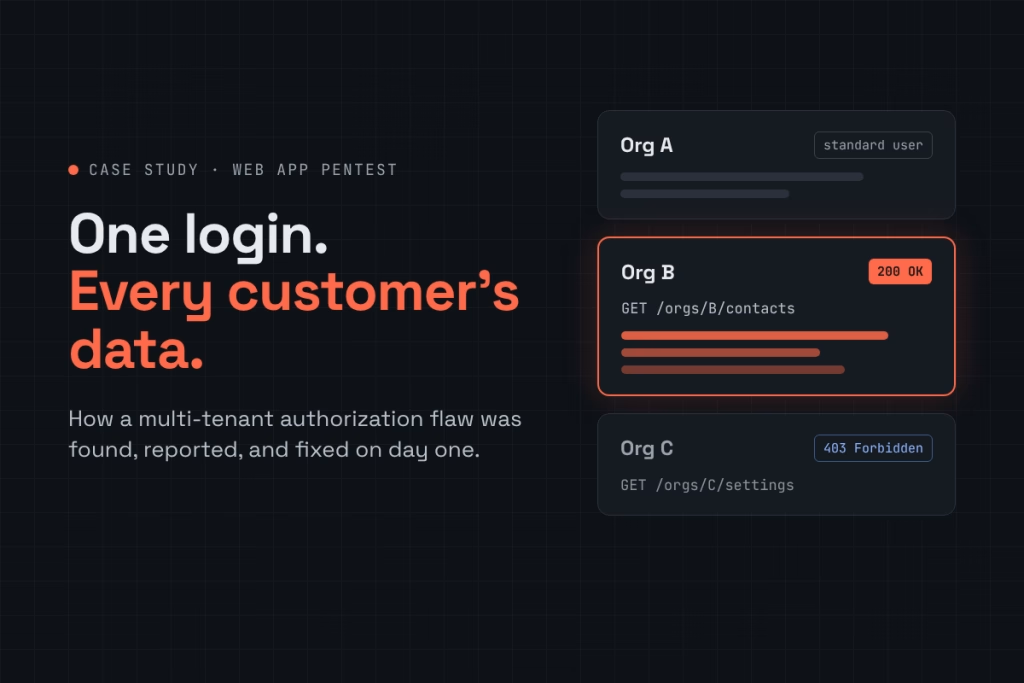
Case Study: The Auth Bug That Exposed Data Across a Multi-Tenant SaaS Platform
This case study is based on a real penetration test. The client, its product, and its customers have been anonymized to protect confidentiality….
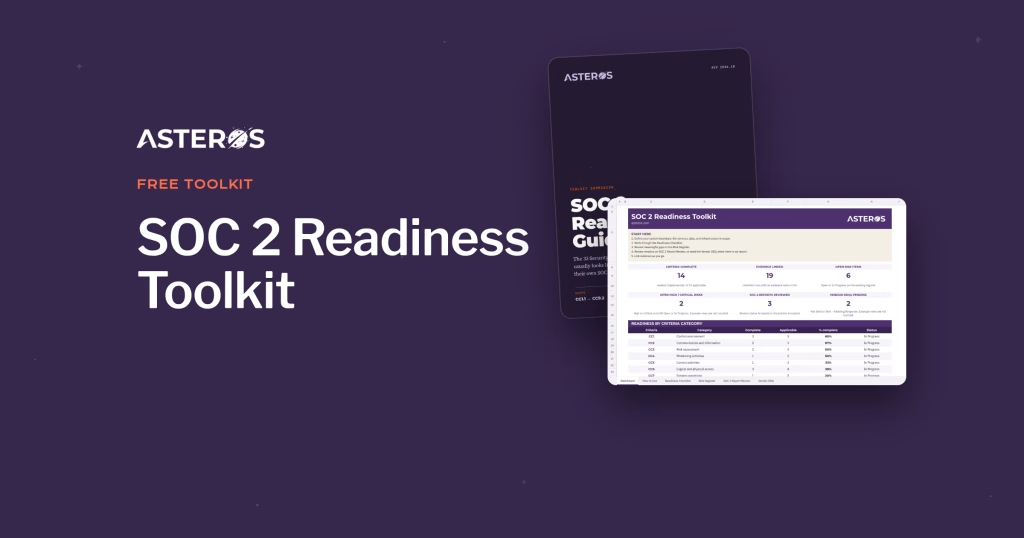
Introducing the Asteros SOC 2 Readiness Toolkit
Today we’re releasing the Asteros SOC 2 Readiness Toolkit: a plain-English guide to all 33 Security criteria, a working readiness workbook, and a…

Introducing Asteros AI
Running a cybersecurity consulting company gives you an interesting window into how businesses actually operate. You spend time with founders, engineering leaders, operations…

Your Security Questionnaire Now Has an AI Section. Most Teams Are Not Ready.
The vendor security questionnaire used to be a predictable exercise. SOC 2 Type II report, check. Encryption at rest and in transit, check….

HoneyMCP: An MCP Server Honeypot for AI Infrastructure Research
MCP servers are quietly becoming part of modern enterprise infrastructure. AI agents need tools. Tools need access to internal systems. Before long, organizations…

Red Sentry vs. Asteros: What “Human-Led” Actually Means When You Read the Fine Print
Red Sentry comes up constantly when people search for SOC 2 penetration testing. They have reviews, they have Reddit recommendations, and people who…

Meet Flowstate: Fast, Memorable Passphrases Humans Can Actually Type
Today we’re releasing flowstate.pw, a passphrase generator that produces credentials that are strong, fast to type, and actually memorable. No accounts, no tracking,…

Your Tabletop Exercise Is Boring and That Is Why It Is Not Working
Somewhere in corporate America right now, a security leader is running a tabletop exercise. The scenario came from a template. The participants are…
The Delve Collapse and the Problem of Lazy Penetration Testing
A compliance automation startup just had a very bad winter, and the wreckage is worth studying. In December 2025, a company called Delve…

Your pentest report has one finding. Was that good news or a bad test?
I recently saw a LinkedIn post describing a penetration test that cost $15,000 and resulted in a single finding: a cross-site scripting issue…